
Sign up to view this video
Join Now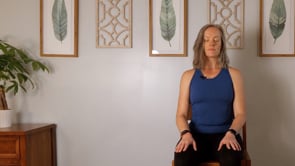
Box Breathing for Calm and Focus
About This Video
In this guided breathing video, Rachel introduces box breathing as a way to help the body and mind calm down and focus.
Rachel explains that box breathing uses four even parts: breathe in for a count of four, hold the breath in for a count of four, breathe out for a count of four, and hold the breath out for a count of four. Participants can imagine making a box with their breath, where each side of the box is the same length.
The video guides participants through several rounds of box breathing while sitting comfortably. Rachel invites participants to sit tall, plant their feet on the floor if they are using a chair, close their eyes or look away from the screen, and focus on the breath and the count.
Rachel also explains that if holding the breath for four counts feels difficult, participants can use a shorter count as long as each part of the breath is the same length. This video gives participants a practical calming activity focused on breathing, self-regulation, focus, body awareness, and using a simple tool during the day.
Good For
Adults with IDD who are practicing breathing, calming down, focus, body awareness, self-regulation, or transitions between activities.
Caregivers looking for a short guided breathing video that can support calm, focus, and emotional regulation.
Adult day programs, home routines, or group activities about breathing, mindfulness, calming the body, transitions, focus, and daily self-care.
Participants who benefit from clear counting, repetition, gentle pacing, and a simple calming routine they can return to when needed.
How to Use This Video
Use this video when participants need a calming break, a focus reset, a transition between activities, or a short breathing practice.
Caregivers can help participants find a comfortable seated position, sit tall, place their feet on the floor if seated in a chair, and decide whether to close their eyes or look away from the screen. Participants can follow Rachel’s count or use a shorter count if that feels better.
This video can be used before a harder task, after a busy activity, during a stressful moment, or as part of a daily calming routine. Participants do not need to do the breathing perfectly. The goal is to practice noticing the breath and returning to a steady rhythm.
Because breathing practices can feel different for each person, caregivers can support comfort, pacing, posture, and choice. Participants should stop or return to normal breathing if they feel dizzy, uncomfortable, or unsafe.
At the end, participants can notice whether they feel calmer, more focused, or more settled, then use box breathing again whenever they need a break during the day.