
Sign up to view this video
Join Now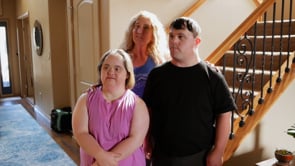
Pilates for Stair Climbing
About This Video
In this guided movement video, Melinda introduces a Pilates-based activity about stair climbing, body awareness, and using muscles instead of locking into joints.
The video begins with seated movements to wake up the body. Participants practice breathing, wrist flexion and extension, elbow bending, neck movement, ankle movement, and knee movement while learning how muscles and joints work together.
Melinda then shows how posture, core strength, knees, ankles, and leg muscles matter when walking up stairs. Tia and Dustin practice using the banister, placing the whole foot on the step, pushing down through the heel, keeping the body upright, and looking ahead while climbing stairs.
This video gives participants a guided movement activity focused on stair safety, body awareness, posture, leg strength, core support, balance, concentration, and everyday movement skills.
Good For
Adults with IDD who are practicing stair climbing, body awareness, balance, posture, leg strength, or everyday movement skills.
Caregivers looking for a guided movement video about safer stair practice, muscle use, joint awareness, and body positioning.
Adult day programs, home routines, or group activities about Pilates, movement, balance, strength, mobility, stair safety, and daily living skills.
Participants who benefit from visual modeling, clear reminders, seated warmups, repeated practice, and support with moving safely and confidently.
How to Use This Video
Use this video as a standalone Pilates-based movement activity about stair climbing and body awareness.
Caregivers can help participants choose a safe space with a stable chair and stairs with a secure banister. Participants can begin with the seated warmup, then practice stair movements only if the setup is safe and support is available.
This video does not need to be completed all at once. Participants can practice the seated wrist, elbow, neck, ankle, and knee movements first, then return later to practice stair climbing with support.
Because this activity involves stairs, balance, standing movement, body positioning, leg strength, and possible fall risk, caregivers should provide close support, clear the area, use a secure banister, adjust the activity as needed, and stop if stairs do not feel safe.
At the end, participants can notice how their legs and body feel, review the idea of pushing through the heel, and return to this video again to keep practicing safe stair movement.