
Sign up to view this video
Join Now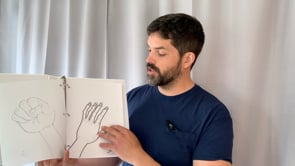
Drawing Hands
About This Video
In this guided activity video, JD leads viewers through studying and drawing hands.
The activity begins with a simple hand-tracing warmup. JD shows viewers how to trace around their hand, then add details like fingernails, knuckle creases, finger lines, and other features they notice. From there, he guides viewers through drawing hands by looking closely at their own hand as a model, including a peace sign and a fist.
Throughout the video, JD encourages viewers to notice shapes, practice observation, and add as much or as little detail as they want. The focus is not on making a perfect drawing. It is on learning how to look, practice, and build confidence with a subject that can be challenging to draw.
This video gives viewers a step-by-step art activity that supports drawing practice, observation, fine motor skills, creativity, and pride in finished work.
Supplies Needed
White paper
Pencil or mechanical pencil
Black marker
Art binder
Three-hole punch, if adding the finished artwork to a binder
Good For
Adults with IDD who enjoy drawing, sketching, tracing, body awareness, portrait drawing, character drawing, or creative art activities.
Caregivers looking for a guided art activity with clear steps, flexible choices, and a useful drawing practice exercise.
Adult day programs, home routines, or group activities about art, observation, fine motor practice, following directions, and self-expression.
Viewers who benefit from calm pacing, encouragement, visual modeling, and permission to practice without needing the drawing to be perfect.
How to Use This Video
Use this video as a guided drawing activity for a home routine, day program, small group, or independent creative time with support nearby.
Caregivers can gather the supplies ahead of time and help viewers set up their paper, pencil, and marker. The first hand drawing can be done by tracing, which may make the activity feel more approachable before moving into drawing by observation.
JD demonstrates several ways to draw hands, so viewers can follow the whole video, pause between drawings, or focus on just one hand shape at a time. Viewers can also use their own hand as a model, add personal details, or simplify the shapes as needed.
Because this activity involves tracing, drawing, marker use, and optional hole punching, caregivers can provide support with setup, hand placement, staying oriented on the page, using a three-hole punch, or adding the finished artwork to an art binder.
At the end, viewers are encouraged to sign their artwork, save it in their binder, and look back at their work over time as their collection grows.