
Sign up to view this video
Join Now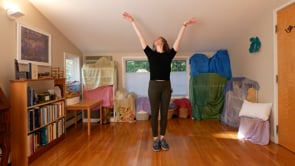
Birds and Swing Dance
About This Video
In this guided dance video, Rachel leads participants through a bird-themed swing movement activity.
The video begins with a swan warmup. Participants move their arms like wings, flutter, fly, float, breathe, and wrap their wings around themselves before moving into the main dance.
Rachel then teaches a Rockin’ Robin-inspired swing dance. Participants practice stepping out and crossing back, doing quick toe taps, making “tweet tweet” bird hands, and trying a Charleston-inspired step with a small forward kick and back touch.
The video ends with a calm cool down using breathing, swinging arms, gentle rocking, rainbow shapes, open-heart movements, singing along, and a final self-hug. This video gives participants a guided dance activity focused on rhythm, body awareness, coordination, imagination, flexible movement, self-expression, and joy.
Good For
Adults with IDD who enjoy dance, music, birds, swing, imaginative movement, rhythm, or guided exercise.
Caregivers looking for a movement video with a warmup, dance instruction, repeated steps, freestyle choices, and a gentle cool down.
Adult day programs, home routines, or group activities about dance, body awareness, coordination, rhythm, creative movement, self-expression, and movement safety.
Participants who benefit from visual modeling, flexible pacing, repeated movement patterns, imagination, and encouragement to move in their own way.
How to Use This Video
Use this video as a guided dance activity for a home routine, day program, small group, bird theme, swing theme, or supported movement session.
Caregivers can help participants choose a safe place to move, clear the area, adjust the volume, and decide whether to dance standing, seated, or with modifications. Participants can follow Rachel closely or adapt the movements to what feels good in their own bodies.
This video includes a swan warmup, taught swing steps, toe taps, Charleston-inspired movement, freestyle dancing, and a gentle cool down. Caregivers can pause between sections, repeat favorite movements, or use only the warmup or cool down if a shorter activity is needed.
Because dance involves movement, balance, coordination, music, space awareness, small kicks, and possible fatigue, caregivers can provide support with pacing, safety, hydration, breaks, volume, personal space, and movement modifications as needed.
At the end, participants can notice how their bodies feel, name a favorite bird or swing movement, and return to this dance again to build comfort with the rhythm and steps.