
Sign up to view this video
Join Now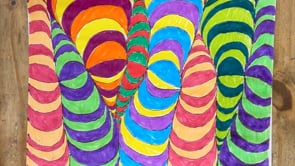
Wavy Line Optical Illusion
About This Video
In this guided activity video, JD leads participants through creating a wavy line optical illusion.
The activity begins with a wavy line across the page, a series of dots, and curved lines that connect from dot to dot. As the design grows, the repeated lines create the feeling that the artwork is rising out of the page, even though it is drawn on flat paper.
After the line work is complete, participants add color with markers or colored pencils. JD encourages participants to go at their own pace, pause the video when needed, choose their own colors, and enjoy the relaxing focus that can come from repeated line work.
This video gives participants a step-by-step art activity focused on optical illusion, pattern-making, color, concentration, creative choice, and pride in finished work.
Supplies Needed
Paper
Black pen or black marker
Markers or colored pencils
Extra paper underneath to protect the table, especially if markers may bleed through
Art binder
Three-hole punch, if adding the finished artwork to a binder
Good For
Adults with IDD who enjoy drawing, coloring, patterns, optical illusions, repeated line work, or creative art activities.
Caregivers looking for a guided art activity with simple supplies, flexible color choices, and a calming repeated process.
Adult day programs, home routines, or group activities about art, focus, fine motor practice, following directions, pattern-making, and self-expression.
Participants who benefit from calm pacing, visual modeling, repetition, and permission to make artwork in their own style.
How to Use This Video
Use this video as a guided drawing and coloring activity for a home routine, day program, small group, or independent creative time with support nearby.
Caregivers can gather the supplies ahead of time and help participants set up their paper, black pen or marker, coloring supplies, and table protection. Because this activity uses repeated lines and coloring, participants may want to pause, take breaks, or return to the project later.
The optical illusion does not need to match JD’s exactly. Participants can use more or fewer dots, make bigger or smaller waves, choose different colors, or color each section in their own pattern.
Because this activity involves repeated drawing, coloring, markers, and optional hole punching, caregivers can provide support with setup, hand fatigue, protecting the table, staying oriented on the page, using a three-hole punch, watching fingers near binder rings, or adding the finished artwork to an art binder.
At the end, participants can sign their artwork, save it in their binder, and look back at how the repeated lines and colors created an optical illusion.