
Sign up to view this video
Join Now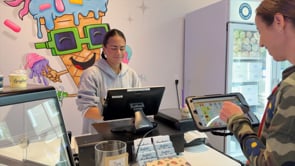
Using AAC at an Ice Cream Shop
About This Video
In this community demonstration video, speech language pathologist Becca Eisenberg shows how AAC can support communication at an ice cream shop.
The video demonstrates a real-life ordering routine, including looking at choices, using a communication device to order a small vanilla ice cream with rainbow sprinkles in a cup, paying with a credit card, and saying thank you.
Participants can see how communication support can be used during an everyday community activity. The video models practical language for ordering food, choosing a size and flavor, adding a topping, choosing a cup, paying, and interacting politely with someone behind the counter.
This video gives caregivers, families, and support teams a concrete example of how AAC can support community participation, choice-making, social interaction, and greater independence during a familiar outing.
Good For
Adults with IDD who are learning about ordering ice cream, choosing toppings, paying, or communicating in public places.
Caregivers who want to see AAC used in a real community setting.
Families, support teams, and adult day programs practicing ice cream shop routines, community access, communication, choice-making, ordering, and payment skills.
Participants who benefit from visual modeling, repeated practice, real-life examples, and support with communication during community outings.
How to Use This Video
Use this video before an ice cream shop trip, community outing, or practice session about ordering food in public.
Caregivers can watch with participants and pause to talk through each step of the routine. The video can be used to practice looking at choices, choosing a size, choosing a flavor, choosing toppings, ordering in a cup or cone, paying with a credit card, saying thank you, and waiting for the next step.
This video may also help caregivers think about what communication supports a person might need before going to an ice cream shop. That could include preparing messages ahead of time, reviewing menu choices, practicing polite phrases, bringing a communication device, or making sure the person has enough time to communicate during the interaction.
Because community outings can involve money, choices, waiting, sensory input, food preferences, and conversations with unfamiliar people, caregivers can provide support with planning, pacing, payment, safety, and communication access as needed.
Learn More
This video was created in collaboration with Becca Eisenberg of Life Skills 2 Learn. Becca also put together a helpful AAC resource list for Delight Station families, caregivers, and support teams. You can view it here: AAC Resources from Life Skills 2 Learn.