
Sign up to view this video
Join Now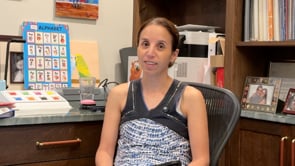
Understanding AAC
About This Video
In this informational video, speech language pathologist Becca Eisenberg introduces augmentative and alternative communication, often called AAC.
Becca explains that AAC can support people who use some speech, people who do not use spoken words, and people who may need communication support only some of the time. She also talks about common myths, including the idea that AAC is only for people who are completely nonverbal, that AAC prevents speech, or that a person needs certain prerequisite skills before they can use AAC.
The video also introduces different types of AAC, including non-electronic communication boards, communication books, iPad apps, and high-tech communication devices. Becca discusses AAC evaluations, funding options, and examples of apps and tools used in communication support.
This video gives caregivers, families, and support teams a basic starting point for understanding AAC, communication rights, access, and the importance of helping each person communicate in the way that works best for them.
Good For
Caregivers who want a basic introduction to AAC and how it can support communication.
Families, support teams, and adult day programs learning about communication tools for adults with IDD.
People who want to better understand AAC myths, communication rights, evaluations, devices, apps, and low-tech communication supports.
Caregivers looking for a respectful, practical overview from a speech language pathologist with experience in augmentative and alternative communication.
How to Use This Video
Use this video as an introduction to AAC for caregivers, families, direct support teams, or program staff.
This video may be helpful before exploring communication boards, AAC apps, AAC evaluations, or communication support strategies. Caregivers can watch it to build shared language around AAC and to better understand that communication support can look different for different people.
After watching, caregivers may want to write down questions for a speech language pathologist, AAC specialist, school team, day program, or medical provider. This video is not a substitute for an individualized AAC evaluation, but it can help caregivers understand what AAC is and why access to communication matters.
This video can also be paired with Delight Station videos that use communication boards or AAC tools in community settings, such as visiting a bakery, going to the movies, or ordering at an ice cream shop.
Learn More
This video was created in collaboration with Becca Eisenberg of Life Skills 2 Learn. Becca also put together a helpful AAC resource list for Delight Station families, caregivers, and support teams. You can view it here: AAC Resources from Life Skills 2 Learn.