
Sign up to view this video
Join Now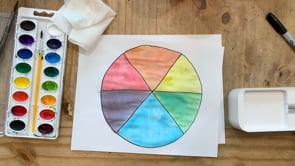
Painting a Color Wheel
About This Video
In this guided activity video, JD leads viewers through creating a watercolor color wheel.
The activity begins by drawing a large circle and dividing it into six sections, like slices of pie. JD then guides viewers through painting the primary colors, red, yellow, and blue, before mixing them together to create the secondary colors, orange, green, and purple.
Along the way, JD introduces simple color concepts, including primary colors, secondary colors, complementary colors, warm colors, and cool colors. He encourages viewers to experiment, take their time, and not worry about making the color wheel perfect.
This video gives viewers a hands-on art activity that combines drawing, watercolor painting, color mixing, experimentation, and creative learning.
Supplies Needed
Paper
Black marker
Watercolor paints
Paint brushes
Cup of water for rinsing brushes
Paper towel
Extra paper underneath to protect the table
Art binder
Three-hole punch, if adding the finished artwork to a binder
Good For
Adults with IDD who enjoy painting, color, art experiments, watercolor, or creative learning activities.
Caregivers looking for a guided art activity that introduces basic color theory in a simple, hands-on way.
Adult day programs, home routines, or group activities about art, color mixing, fine motor practice, following directions, creativity, and self-expression.
Viewers who benefit from calm pacing, visual modeling, repetition, and permission to experiment without needing the artwork to be perfect.
How to Use This Video
Use this video as a guided watercolor activity for a home routine, day program, small group, or independent creative time with support nearby.
Caregivers can gather the supplies ahead of time and help viewers set up their paper, marker, watercolors, brushes, water cup, paper towel, and table protection. Because this activity involves water and paint, it may help to keep extra paper or towels nearby and allow time for the color wheel to dry before putting it in a binder.
JD gives step-by-step instructions, but the color wheel does not need to be exact. Viewers can focus on experimenting with color, noticing what happens when paints mix, and seeing how red, yellow, and blue can create new colors.
Because this activity involves paint, water, markers, color mixing, drying time, and optional hole punching, caregivers can provide support with setup, brush rinsing, managing spills, staying oriented on the page, using a three-hole punch, or adding the finished artwork to an art binder.
This activity can also be repeated later as a familiar color-mixing exercise. Viewers can try stronger colors, lighter colors, new combinations, or use the color wheel as a reference for future art projects.