
Sign up to view this video
Join Now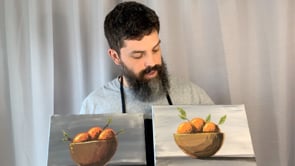
Painting a Bowl of Oranges
About This Video
In this guided activity video, JD leads participants through painting a bowl of oranges on canvas with acrylic paint.
The activity focuses on using primary colors to create new colors. Participants use red, blue, and yellow, then mix colors to create orange, green, brown, and gray tones for different parts of the painting.
JD guides participants through setting up the canvas, sketching the design, painting the background, and building the bowl of oranges step by step. The project gives participants a chance to practice color mixing, brush use, layering paint, and completing a still life painting.
This video gives participants a creative art activity focused on acrylic painting, primary colors, mixing colors, observation, brush control, creative choice, and pride in finished work.
Supplies Needed
Canvas, such as a 9 by 12 inch canvas or another similar painting surface
Pencil
Acrylic paint, including red, blue, yellow, black, and white
Paint brushes
Cup of water for rinsing brushes
Paper towels
Paper plate or palette for paint
Paint apron or clothes that can get messy
Hair dryer, optional and only with caregiver support
Good For
Adults with IDD who enjoy painting, fruit, oranges, color mixing, still life art, or creative art activities.
Caregivers looking for a guided painting activity that introduces primary colors and color mixing in a practical, visual way.
Adult day programs, home routines, or group activities about art, acrylic painting, color, fine motor practice, following directions, and self-expression.
Participants who benefit from visual modeling, encouragement, creative choice, and a step-by-step project they can complete with support nearby.
How to Use This Video
Use this video as a guided acrylic painting activity for a home routine, day program, small group, or supported creative time.
Caregivers can gather the supplies ahead of time and help participants set up their canvas, pencil, paints, brushes, water cup, paper towels, and palette. Because acrylic paint can stain clothing, it may help to protect the table and have participants wear an apron or clothing that can get paint on it.
JD gives step-by-step instructions, but the painting does not need to match his exactly. Participants can change the size of the bowl, adjust the number of oranges, experiment with color mixing, or simplify parts of the painting as needed.
Because this activity involves acrylic paint, water, brush rinsing, drying time, color mixing, and optional use of a hair dryer, caregivers can provide support with setup, managing spills, cleaning brushes, portioning paint, staying oriented on the canvas, drying safely, and letting the finished painting dry before moving it.
At the end, participants can sign their artwork, let it dry, show it off, and save or display it as part of their art collection.