
Sign up to view this video
Join Now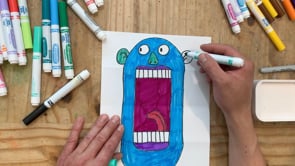
Making Paper Puppets
About This Video
In this guided activity video, JD leads viewers through making paper puppets with moving mouths.
The activity begins by folding a sheet of paper into an accordion-style shape so the puppet’s mouth can open and close. JD then shows viewers how to draw a face across the folds, add eyes, a nose, ears, lips, teeth, and a tongue, then color the puppet with markers.
JD also repeats the steps with a second puppet, creating a colorful dragon with four eyes, nostrils, spikes, sharp teeth, and a wide open mouth. Throughout the video, he encourages viewers to pause, rewind, ask for help, choose their own colors, and make the puppet their own.
This video gives viewers a playful, step-by-step art activity that combines paper folding, drawing, coloring, creativity, and pretend play.
Supplies Needed
Paper
Markers
Good For
Adults with IDD who enjoy drawing, coloring, paper crafts, puppets, characters, monsters, dragons, or creative art activities.
Caregivers looking for a guided art activity with simple supplies, clear steps, and room for creativity.
Adult day programs, home routines, or group activities about art, fine motor practice, following directions, character design, and self-expression.
Viewers who benefit from visual modeling, repetition, encouragement, and a finished project they can play with after creating it.
How to Use This Video
Use this video as a guided art and paper craft activity for a home routine, day program, small group, or independent creative time with support nearby.
Caregivers can gather the supplies ahead of time and help viewers fold the paper, especially during the first few steps. JD repeats the folding process later in the video, which can help viewers practice the sequence again or make a second puppet.
The puppet does not need to match JD’s exactly. Viewers can choose different colors, make a person, animal, monster, dragon, or silly character, and add their own details. After the puppet is finished, viewers can use it for pretend conversations, storytelling, jokes, or showing others what they made.
Because this activity involves folding paper and using markers, caregivers can provide support with setup, hand positioning, creasing the paper, staying oriented on the folds, or slowing the video down as needed.
This activity can also be repeated later with new characters, giving viewers a familiar creative routine that supports choice, confidence, and imaginative play.