
Sign up to view this video
Join Now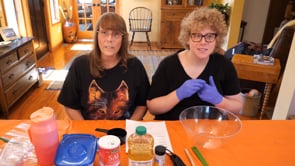
Making Homemade Play Dough
About This Video
In this craft activity, Risa and Amanda show participants how to make homemade play dough.
The video begins by gathering the ingredients and supplies, including flour, salt, cream of tartar, canola oil, warm water, optional food coloring, a mixing bowl, measuring tools, a spoon or spatula, gloves, and storage bags.
Participants follow along as Risa and Amanda measure flour, cream of tartar, salt, oil, and warm water into a bowl. Risa explains that the recipe is forgiving, so the measurements do not need to be perfect. She also explains that warm tap water helps the salt dissolve.
After mixing the base, participants learn how to adjust the texture by adding more flour if the mixture is too soupy or sticky. Risa and Amanda knead the dough until it becomes soft, smooth, and play dough-like. Then they divide the dough and add food coloring to make different colors.
The video ends with reminders about storage and care. If the play dough dries out, participants can add a little oil or water to soften it. To preserve it, they can store it in an airtight container or bag. This video gives participants a hands-on craft activity focused on measuring, mixing, kneading, color, texture, sensory play, following directions, and making something to use again.
Supplies Needed
All-purpose flour
Table salt
Cream of tartar
Canola oil
Warm tap water
Food coloring, optional
Mixing bowl
Spoon or spatula
Measuring cups and spoons
Gloves, optional
Airtight container or storage bags
Good For
Adults with IDD who enjoy crafts, sensory materials, measuring, mixing, kneading, color, texture, or making something by hand.
Caregivers looking for a hands-on craft activity with everyday materials, flexible measuring, and room for sensory exploration and creative play.
Adult day programs, home routines, or group activities about crafts, sensory play, kitchen skills, measuring, following directions, color mixing, texture, and self-expression.
Participants who benefit from visual modeling, repeated steps, flexible pacing, hands-on materials, and permission to adjust the activity as they go.
How to Use This Video
Use this video as a guided craft activity for a home routine, day program, small group, or supported kitchen or craft session.
Caregivers can help participants gather ingredients, read labels, set up the workspace, and decide whether to use gloves or food coloring. Participants can help measure, pour, stir, knead, add color, and store the finished play dough.
This video can be paused often while participants measure ingredients, mix the base, check the texture, add more flour if needed, knead the dough, divide it into sections, add food coloring, and place the finished dough into storage bags or containers.
Because this activity involves flour, salt, oil, food coloring, kneading, possible mess, and non-food sensory material, caregivers should provide support with setup, handwashing, cleanup, ingredient safety, clothing protection, storage, and reminders not to eat the play dough. Risa also notes that the salt in the play dough is not healthy for pets, so dropped pieces should be picked up and kept away from animals.
At the end, participants can name the colors they made, build something with the play dough, store it for another day, or talk about how the texture changed during mixing and kneading.