
Sign up to view this video
Join Now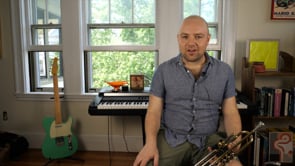
Introducing the Trumpet
About This Video
In this music enrichment video, Alex introduces participants to the trumpet and other related brass instruments.
Alex begins by showing how the trumpet works. Participants learn that the mouthpiece is an important part of the sound, and that trumpet players use buzzing with their lips to create the starting sound before the trumpet makes it louder and fuller.
The video also explains how valves change the length of the trumpet’s tubing, which helps the player reach different notes. Alex demonstrates how the trumpet, cornet, and flugelhorn are similar, while also showing how each instrument has a slightly different shape, feel, sound, and mood.
Later in the video, Alex introduces trumpet mutes, including a straight mute, cup mute, Harmon mute, plunger, and even a glass. Participants hear how each mute changes the sound of the trumpet and can make the instrument feel distant, old-timey, cool, playful, or almost like it is talking.
This video gives participants a chance to learn about brass instruments, hear live demonstrations, notice different sounds, and explore how instruments can create different musical emotions.
Good For
Adults with IDD who enjoy music, instruments, live performance, trumpet, brass instruments, jazz, or learning how things work.
Caregivers looking for a music enrichment video that introduces the trumpet in a friendly, conversational way.
Adult day programs, home routines, or group activities about music, instruments, sound, air, valves, rhythm, listening, and creative expression.
Participants who benefit from seeing real instruments up close, hearing demonstrations, asking questions, and exploring music through observation.
How to Use This Video
Use this video as a music enrichment activity for a home routine, day program, small group, or music appreciation session.
Caregivers can watch with participants and pause to talk about what they notice. Participants can look for the mouthpiece, valves, tubing, bell, cornet, flugelhorn, and different mutes.
This video can also be used before or after listening to trumpet music, jazz, brass ensembles, marching bands, or orchestral music. Caregivers can invite participants to compare high and low notes, loud and soft sounds, bright and dark sounds, or the way different mutes change the mood of the music.
Because this is an observation and music enrichment video, participants do not need a trumpet to take part. The main activity is watching, listening, noticing, and enjoying the demonstrations.
At the end, participants can name one thing they learned about the trumpet, describe a sound they liked, or choose another instrument they would like to learn about.