
Sign up to view this video
Join Now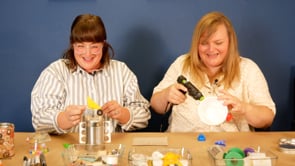
Making Found Object Art
About This Video
In this craft activity, Kate and Nicole show participants how to make sculptures from recycled materials.
The video begins by inviting participants to collect clean recycled items from home, work, or everyday life. Kate and Nicole show examples such as bottle caps, can tabs, film containers, spools, clothespins, containers, pouch tops, and other found objects.
Participants learn that a sculpture is something three-dimensional that can be made from many different materials. Kate and Nicole explain two creative approaches: making something representational, which means it looks like something from real life, or making something abstract, which means exploring shape, color, texture, and pattern without needing it to look like a specific object.
Kate and Nicole then demonstrate how to build with recycled materials. One sculpture becomes a robot named Pickles, while another uses circular shapes, color, and pattern. Along the way, they talk about noticing shapes, trying ideas, using a hot glue gun safely with support, holding pieces in place while glue dries, adding details with markers, and accepting that mistakes can happen during the process.
This video gives participants a hands-on craft activity focused on recycled materials, sculpture, three-dimensional building, color, pattern, texture, creative problem solving, and turning everyday objects into something new.
Supplies Needed
Clean recycled materials, such as bottle caps, can tabs, containers, pouch tops, clothespins, spools, buttons, or other found objects
Glue, such as Elmer’s glue
Hot glue gun, with caregiver support
Hot glue sticks
Cardboard, paper, or another surface to protect the table
Markers, Sharpies, or paint markers for details
Good For
Adults with IDD who enjoy crafts, building, recycled materials, robots, found objects, color, texture, or making something by hand.
Caregivers looking for a creative activity with flexible materials, open-ended choices, and room for problem solving and experimentation.
Adult day programs, home routines, or group activities about crafts, recycling, sculpture, building, color, pattern, texture, planning, and creative expression.
Participants who benefit from visual modeling, hands-on exploration, open-ended projects, choice-making, and permission to try ideas without needing a perfect result.
How to Use This Video
Use this video as a guided craft activity for a home routine, day program, small group, or creative session.
Caregivers can help participants collect clean recycled materials before the activity. Participants can sort materials by color, shape, size, or texture, then decide whether they want to make something representational, such as a robot, animal, tree, or character, or something abstract based on colors and shapes they like.
This video can be paused often while participants choose a base, test where pieces might go, glue items in place, hold pieces while the glue dries, add marker details, and change their plan if something shifts or does not work the first time.
This activity can be adjusted in many ways. Participants can use fewer objects, larger materials, pre-sorted items, a prepared base, caregiver help with hot glue, or non-hot glue options when more time is available for drying.
Because this activity involves recycled materials, glue, optional hot glue, small objects, possible sharp edges, and step-by-step construction, caregivers should provide support with material selection, safety, setup, gluing, pacing, cleanup, and any needed visual or hands-on assistance.
At the end, participants can name their sculpture, describe whether it is representational or abstract, choose where to display it, give it as a gift, or collect more materials for another recycled sculpture.